

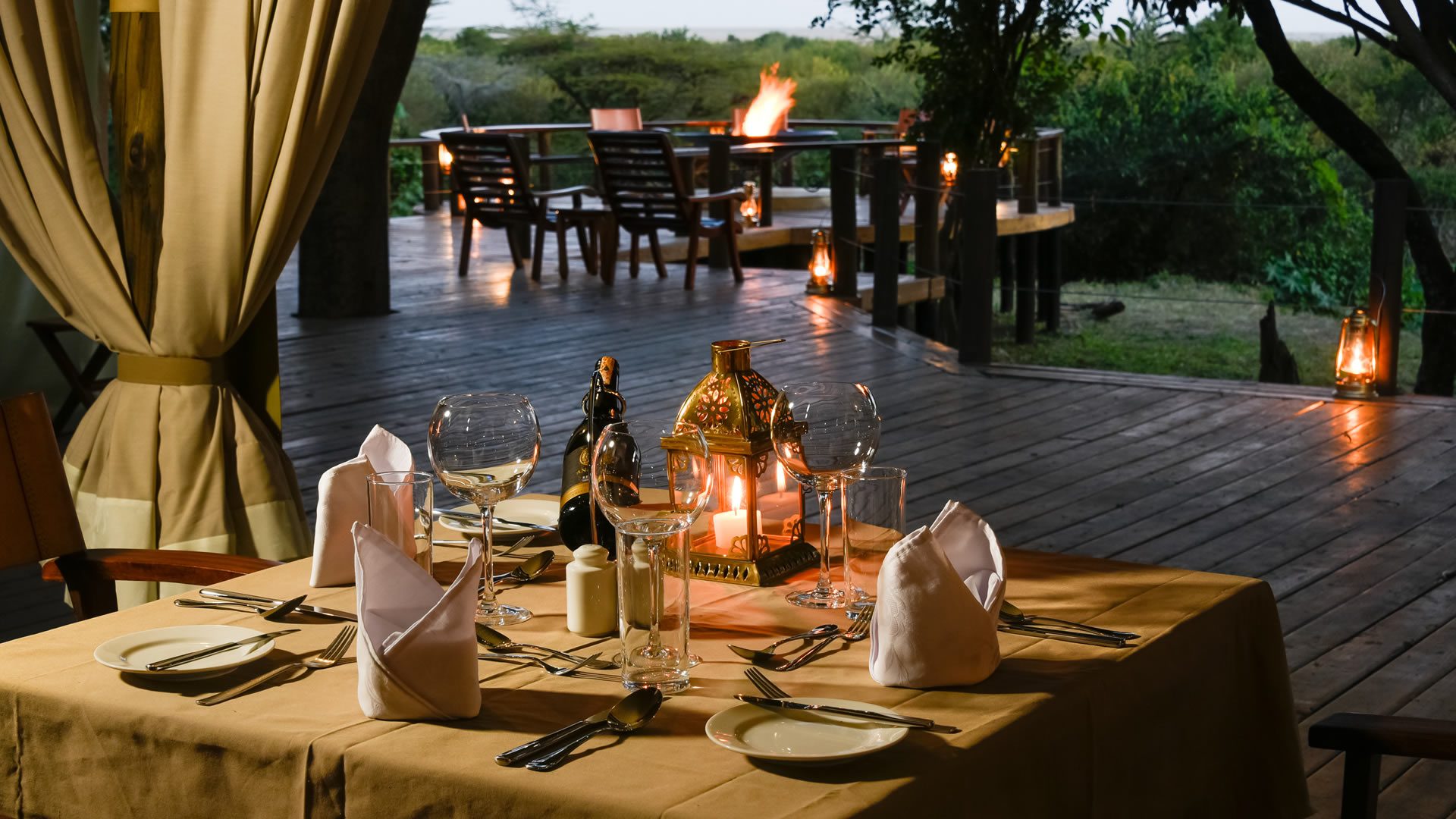
There is a price band in the Kenya safari market that nobody talks about honestly. Below USD 200 per person per night, the beds are narrow, the showers are unpredictable, and the vehicle might be a minibus with a pop-top that sticks. Above USD 800, you are paying for thread count, private plunge pools, and a butler who remembers your drink order. Between those two numbers is where the most interesting safari accommodation in the country lives, and where the gap between what you pay and what you experience is widest.
Mid-range in Kenya means USD 250 to USD 600 per person per night, typically full board with game drives included. At this level you get a private bathroom, a comfortable bed, a Land Cruiser with a pop-up roof, and a guide who knows the difference between a martial eagle and a tawny eagle. You will not get a heated infinity pool overlooking the Mara River. You will get a safari that, in terms of the actual wildlife you see, is functionally identical to the one costing three times as much.
Masai Mara
Basecamp Masai Mara sits inside the Mara Triangle on the banks of the Talek River. Twelve tents built from natural and recycled materials. Solar powered. Community owned in partnership with the local Maasai. Rates sit in the USD 350 to USD 500 range per person per night full board depending on season. The location inside the reserve means you are on game drive within minutes of leaving camp, no commute from an external gate. Walking safaris and cultural visits to the neighbouring Maasai village are included.
The traveler this suits: someone who wants an authentic, low-footprint experience in the reserve itself without paying conservancy-level luxury prices.
Mara Engai Wilderness Lodge overlooks the Mara from an escarpment position in the Oloololo area. Thirty rooms with private balconies facing the plains. The views alone compete with properties charging twice the rate. Full board with game drives included. Rates typically USD 300 to USD 450 per person. The location on the western escarpment means less vehicle congestion than the Sekenani or Talek gate areas.
The traveler this suits: someone who values a view and wants to feel elevated above the Mara rather than embedded in it.
Ilkeliani Camp is a tented camp near the Talek Gate with 30 tents, each with en-suite bathrooms. It sits just outside the reserve boundary, which means lower rates (USD 200 to USD 350 per person full board) but a short drive to the gate each morning. The camp runs its own vehicles and guides. For travelers on a tighter mid-range budget, this is one of the best value-to-quality options near the Mara.
The traveler this suits: a first-timer who wants the Mara experience without the peak-season premium of camps inside the reserve.
Amboseli
Amboseli Sopa Lodge is one of the most established mid-range options in the park. Spacious rooms, manicured gardens, a pool, and direct access to game drives in Amboseli’s elephant country with Kilimanjaro as the backdrop. Rates range from USD 150 to USD 300 per person per night. The lodge has been operating for decades and the infrastructure shows its age in places, but the location inside the park and the reliability of the elephant sightings make it a solid mid-range choice.
The traveler this suits: families and groups who want Amboseli’s famous Kilimanjaro-and-elephants scene at a predictable price.
Ol Tukai Lodge sits in the heart of Amboseli, surrounded by acacia woodland and elephant herds that routinely walk through the grounds. Eighty rooms, a pool, and two restaurants. Rates run USD 250 to USD 400 per person full board depending on season. The elephant activity around the lodge itself is so consistent that some of the best photography of your trip may happen between meals rather than on game drives.
The traveler this suits: wildlife photographers and anyone who wants elephants visible from their room.
Laikipia and the Central Highlands
Ol Pejeta Bush Camp is inside Ol Pejeta Conservancy, home to the last two northern white rhinos on the planet and one of the highest densities of black rhino in East Africa. Nine tented rooms along the Ewaso Nyiro River. Full board with game drives included. Rates sit around USD 300 to USD 500 per person. The conservancy fee is included. Night drives and walking safaris are permitted. The camp operates with a strong conservation ethos and revenues directly fund Ol Pejeta’s rhino and wildlife programs.
The traveler this suits: anyone for whom conservation matters as much as comfort, and anyone who wants a near-guaranteed rhino sighting.
Sweetwaters Serena Camp also sits within Ol Pejeta and offers a more structured lodge experience than the bush camp. Thirty-nine tents with en-suite bathrooms, a pool, and a waterhole viewpoint. Rates typically USD 250 to USD 400 per person. The camp’s main advantage beyond the rhinos is its chimpanzee sanctuary, the only place in Kenya where you can see chimpanzees.
The traveler this suits: families with children who want variety beyond the typical Big Five game drive.
Samburu
Samburu Sopa Lodge provides a comfortable mid-range base for Samburu National Reserve, one of Kenya’s most underrated parks. The reserve is home to species you will not find in the Mara or Amboseli: the reticulated giraffe, Grevy’s zebra, gerenuk (the giraffe-necked antelope), Beisa oryx, and Somali ostrich, collectively known as the Samburu Special Five. Rates range from USD 150 to USD 300 per person. The lodge sits on the banks of the Ewaso Nyiro River where elephants cross regularly.
The traveler this suits: a returning visitor who has done the Mara and wants something different, or a first-timer willing to trade migration spectacle for wildlife diversity and fewer crowds.
Saruni Samburu sits slightly above this price range in peak season but dips into mid-range territory during green season (April to June), when rates drop to USD 350 to USD 500 per person. Six villas with open-front designs facing the Kalama Conservancy. The guiding here is exceptional, Samburu warriors work alongside trained naturalists. If you can time your visit for the shoulder months, this is the strongest quality-to-price proposition in northern Kenya.
The traveler this suits: the couple or solo traveler who wants boutique quality at off-peak pricing.
Tsavo
Kilaguni Serena Safari Lodge was the first lodge built inside a Kenyan national park (1962) and sits in Tsavo West overlooking a waterhole that attracts elephant, buffalo, and lion. Fifty-two rooms, a pool, and the kind of old-school safari atmosphere that the newer camps cannot replicate. Rates run USD 150 to USD 300 per person. Tsavo’s park fees are lower than the Mara’s, which helps keep total trip costs down.
The traveler this suits: the history-minded traveler, the budget-conscious mid-ranger, or anyone who wants big-park wilderness without Mara prices.
Ashnil Aruba Lodge in Tsavo East sits beside the Aruba Dam, one of the most reliable waterhole locations in the park. Forty tented rooms with en-suite bathrooms. Rates are in the USD 150 to USD 250 range. Tsavo East’s famous red elephants, coloured by the park’s iron-rich soil, are a regular presence. The park is enormous and less visited than the Mara, which means game drives have a solitary quality that the more popular parks cannot match.
The traveler this suits: the traveler who finds the Mara too crowded and wants a raw, spacious safari at a lower price point.
Lake Nakuru and Lake Naivasha
Lake Nakuru Sopa Lodge overlooks Lake Nakuru National Park, famous for its flamingo congregations (numbers vary with water levels) and its rhino sanctuary. The lodge is perched on a cliff with panoramic views. Rates run USD 150 to USD 300 per person. The park is compact and manageable in a single full day, making it a strong addition to a multi-park itinerary between Nairobi and the Mara.
Lake Naivasha Simba Lodge sits on the shores of Lake Naivasha with hippos grazing the grounds at night. Rates around USD 100 to USD 200 per person on bed and breakfast. The lodge works well as a transit stop between Nairobi and the Mara, or as a base for Hell’s Gate National Park and Crescent Island walking safari. It is not a destination lodge, it is a smart logistical choice that happens to have hippos in the garden.
How to Get the Best Value
Travel in green season (April to June). Most mid-range lodges drop rates 30 to 50 percent. Wildlife viewing is still rewarding, the landscape is green and photogenic, and you will have game drives largely to yourself.
Book directly with the lodge where possible. Many lodges offer a lower rate for direct bookings than through aggregator sites, and you can negotiate extras like complimentary game drives or room upgrades.
Combine expensive and affordable parks. Two nights in the Mara plus two nights in Tsavo or Amboseli keeps the total trip cost manageable while covering different ecosystems and wildlife profiles.
Ask about resident rates. If you are a Kenyan citizen or East African resident, most lodges offer significantly reduced rates. Kenyan citizen park fees are a fraction of non-resident fees, which changes the overall budget equation dramatically.
Fly one way, drive the other. A bush flight from the Mara to Nairobi saves a full day of driving (USD 150 to USD 250 per person). Drive to the Mara, fly back. The savings in time and energy are worth the one-way flight cost.
What Mid-Range Does Not Give You
Night drives and walking safaris are typically only available in private conservancies, not inside national reserves. Most mid-range lodges in the Mara National Reserve do not offer these. If off-vehicle experiences matter to you, look specifically at camps in Ol Pejeta, the Mara conservancies (Naboisho, Ol Kinyei), or Samburu’s Kalama Conservancy.
Exclusive vehicle limits at sightings. In the national reserve, popular sightings attract multiple vehicles. Conservancies cap vehicle numbers. This is the single biggest experience difference between a mid-range reserve camp and a luxury conservancy camp, and it has nothing to do with the bed you sleep in.
Private guide continuity. At mid-range camps, guides may rotate between guests. At luxury camps, your guide is assigned to you for the duration. If guide continuity matters, request it at booking.
The Honest Position
The lion does not care whether your tent cost USD 300 or USD 1,500 a night. The crossing does not wait for the luxury vehicle. The sunrise looks the same from every camp on the escarpment. What mid-range safari accommodation in Kenya offers, at its best, is the removal of every barrier between you and the reason you came, without charging you for barriers that were never there in the first place.