

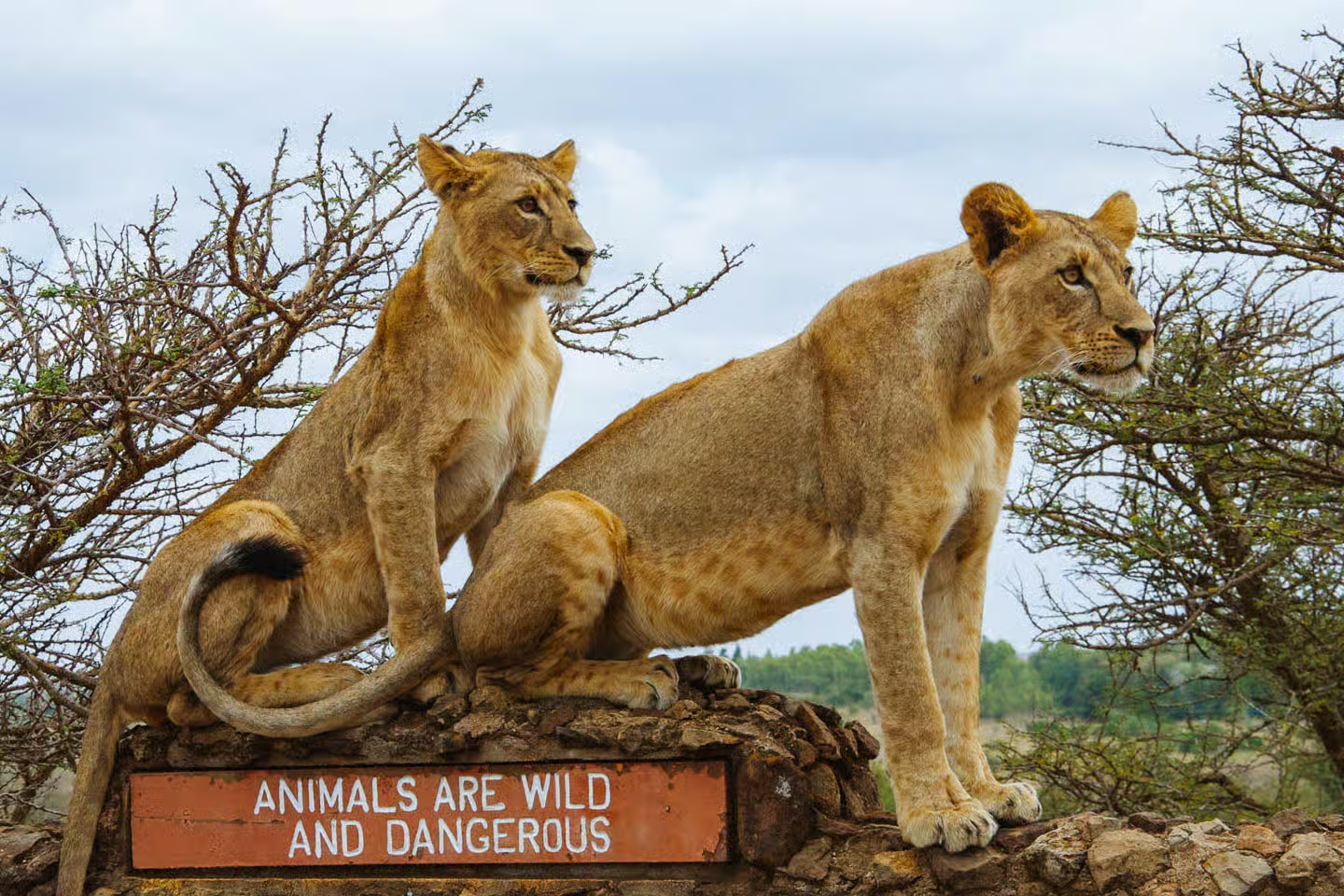
A successful first trip to Kenya requires understanding the new eTA entry system, downloading the M-Pesa app for digital payments, and booking domestic bush flights to save time. This Kenya travel guide for first timers breaks down exactly how to navigate Nairobi safely, bypass logistical traps, and execute the perfect safari-to-beach itinerary.
Most online advice about Kenya is written by tourists who visited once in 2015. The country moves fast. The visa process has completely changed, physical cash is practically obsolete, and the transport infrastructure has upgraded massively. If you are planning your first trip, you do not need poetic descriptions of sunsets; you need hard logistics. Here is the exact blueprint our team at Bucketlist Kenya uses to orchestrate flawless trips for first-time arrivals.
THE ESSENTIALS BOX
- Best time to go: July to October (Great Migration) or January to March (hot, dry, uncrowded).
- Power Adapter: UK-style Type G (three rectangular pins).
- Language: English and Swahili are official. You will have zero language barriers in tourist zones.
- Biggest mistake: Trying to self-drive between major ecosystems.
At a Glance: First-Timer Logistics
| Category | The 2026 Reality | Action Required Before Landing |
| Visa / Entry | Kenya is “Visa-Free” but requires an eTA | Apply online 2 weeks before flying |
| Currency | Digital money (M-Pesa) is king | Download TouristTap or M-Pesa app |
| Health | Yellow Fever cert required if from endemic zone | Get malaria prophylaxis from your doctor |
| Transport | Uber works perfectly in Nairobi | Download Uber and Bolt apps |
How Does the Kenya eTA Entry System Work?
Kenya recently declared itself a “visa-free” country, which confuses many first-timers. While you do not need a traditional visa, every single traveler (including infants) must apply for an Electronic Travel Authorisation (eTA) before boarding their flight.
You apply via the official government portal (www.etakenya.go.ke). It costs roughly $30, and processing takes about 72 hours. Do not use third-party agencies that charge $100 to do this for you—it is a scam. Print a physical copy of your approved eTA; the immigration officers at Jomo Kenyatta International Airport (JKIA) will ask for it.
Is It Safe for Tourists to Travel in Kenya?
Yes, Kenya is highly secure for international tourists, provided you exercise standard urban street smarts. The safari reserves and coastal resorts are heavily guarded bubbles.
Nairobi Safety Rules:
- Keep your phone in your pocket: Do not walk down busy CBD streets casually filming TikToks. Phone snatching by guys on motorbikes (boda-bodas) is the most common petty crime.
- Use verified transport: Never hail an unmarked taxi off the street at night. Use Uber, Bolt, or Little App exclusively so your ride is GPS-tracked.
- Trust your guides: When you are in the bush with Bucketlist Kenya, you are protected by highly trained professionals. Do not break camp rules, and never walk alone at night in the wild.
How Do You Pay for Things in Kenya?
If you bring a massive stack of US dollars and try to use them at a local coffee shop, you will be turned away. Kenya runs entirely on mobile money, specifically M-Pesa.
- The Setup: Historically, tourists struggled to get M-Pesa. Now, you can use apps like TouristTap to link your international credit card directly to local payment systems.
- Card Usage: Visa and Mastercard are accepted at all hotels, major restaurants, and supermarkets.
- Cash Backup: Carry about $100 equivalent in local Kenyan Shillings (KES) in small denominations (100, 200, and 500 notes) for tipping drivers, buying from roadside Maasai markets, and paying porters.
What Is the Best Transport Strategy for First Timers?
Kenya is vast. The distance from Nairobi to the coast is 500 kilometers. The distance to the Maasai Mara is a grueling 6-hour drive on rough roads.
The Golden Rule: Fly between ecosystems. A domestic bush flight via Safarilink or Airkenya from Nairobi to the Maasai Mara takes 45 minutes and costs roughly $350 round-trip. It saves you two entire days of brutal driving.
If you are heading to the coast (Mombasa or Tsavo), you can take the Madaraka Express (SGR) train. It is safe, clean, and highly scenic. However, you must book your first-class tickets exactly 60 days in advance via the official Kenya Railways site, as they sell out instantly.
The Perfect 10-Day Kenya Itinerary for First Timers
If you have 10 days, do not try to see six different parks. You will exhaust yourself. Use this proven 3-part blueprint:
Days 1–2: Nairobi City Culture
Land at JKIA and clear customs. Spend two nights in a boutique hotel in Karen or Westlands to beat the jet lag.
- Do: Visit the David Sheldrick Wildlife Trust (orphan elephants) and eat dinner at a high-end restaurant in Westlands.
Days 3–6: The Core Safari (Maasai Mara)
Fly out of Wilson Airport directly into the Mara. Spend four days tracking big cats.
- Do: Book a camp in a private conservancy to avoid the crowds. Wake up at 6:00 AM for a hot air balloon safari, followed by a champagne breakfast on the plains. Check our Kenya Safari Prices Guide to understand the budgets.
Days 7–10: Coastal Recovery (Diani Beach)
Fly directly from the Mara dirt airstrip to Ukunda (Diani Beach). You trade the dusty Land Cruiser for white sand and Indian Ocean breezes.
- Do: Eat fresh Swahili seafood, book a sunset dhow cruise, and sleep. Fly back to Nairobi on Day 10 for your international connection home.
PRO TIPS FOR FIRST TIMERS
- The Plastic Ban: Kenya has a strict ban on single-use plastics. Do not pack your toiletries in standard plastic grocery bags, and do not bring plastic water bottles in your luggage. Use transparent reusable toiletry bags.
- The Packing Limit: If you take domestic bush flights, your luggage is strictly limited to 15kg (33 lbs) in a soft-sided duffel bag. Hard-shell suitcases will not fit in the plane’s cargo pod.
- The Wardrobe: Skip the heavy hiking boots and safari hats. Bring lightweight, earth-toned clothing (olive, khaki) and a warm fleece jacket—early morning game drives are surprisingly freezing.
Frequently Asked Questions About Traveling to Kenya
Do I need vaccinations to visit Kenya?
There are no mandatory vaccinations for entry unless you are arriving from a country with endemic Yellow Fever (like parts of West Africa or South America), in which case you must show a certificate. However, doctors strongly recommend taking malaria prophylaxis and ensuring your routine shots (typhoid, tetanus) are up to date.
Can I drink the tap water in Kenya?
No. Never drink tap water in Kenya, and do not use it to brush your teeth. Always use bottled or heavily filtered water. All mid-range and luxury safari lodges provide safe, complimentary drinking water in your room and during game drives.
What is the best way to book a Kenya safari?
Do not try to piece together domestic flights, 4×4 transfers, and lodge availability on your own—the logistics will break you. Use a verified, locally based curation team like Bucketlist Kenya. We negotiate better bulk rates with the lodges and handle the complex point-to-point transport so you can actually relax.