

The Land Cruiser pulled up to the marsh at 6:45am and there was nobody else there. No other vehicles. No queue of pop-top roofs jostling for a sightline. Just a lioness with three cubs, roughly four weeks old, working their way through wet grass toward a herd of Thomson’s gazelle that had not yet noticed them. The guide turned the engine off. For the next twenty minutes, the only sounds were birdsong, wind, and the low rumble of a mother teaching her young to hunt. This was the Masai Mara in April. The month the brochures skip.
April is the long rains in Kenya. It is officially low season. International tourist numbers drop. Safari operators discount their rates. Travel blogs warn you away with words like “wet,” “muddy,” and “not recommended.” Most of this is either misleading or wrong.
Here is what April in Kenya actually looks like, what it costs, and why the travelers who know what they are doing come specifically during this window.
What the Rains Actually Mean
Kenya’s long rains run from late March through May. April is the wettest month, particularly in the highlands and central regions. But “wettest” does not mean “raining all day.” The typical pattern is clear mornings with rain arriving in the afternoon, usually between 2pm and 5pm, as sharp showers or thunderstorms that last 30 minutes to two hours before clearing. Morning game drives, which depart at 6:00 to 6:30am and return by 10:00am, are rarely affected. Afternoon game drives, departing at 3:30 to 4:00pm, may occasionally be shortened or delayed by rain, but experienced guides adjust routes and timing.
Some roads in remote parks become difficult. Black cotton soil in parts of the Mara turns slick when wet, particularly the tracks leading to river crossings. Tsavo’s more remote roads can become impassable after sustained rain. But the main circuits in every major park remain drivable, and lodges that operate year-round maintain their access routes.
The rains are not a wall. They are a rhythm. And the rhythm leaves most of the day wide open.
What It Costs in April vs Peak Season
This is where the arithmetic gets hard to argue with.
Masai Mara entry fees: USD 100 per non-resident adult per day from January to June, compared to USD 200 from July to December (Narok County Government, revised fee structure effective July 2024). That is a 50 percent saving on the single largest fixed cost of a Mara safari.
Amboseli entry fees: USD 90 per non-resident adult per day year-round (KWS, revised 2024). No seasonal variation here, but lodge rates still drop.
Lodge rates: Most mid-range and luxury properties reduce rates by 30 to 50 percent in April. A lodge charging USD 500 per person per night in August might charge USD 250 to USD 350 in April. Budget tented camps that run USD 200 in peak season may drop to USD 120 to USD 150. Some properties offer “stay four, pay three” or similar promotions. Solo travelers often find that single-supplement surcharges are waived.
Domestic flights: Airfares from Nairobi to the Mara, Amboseli, and the coast tend to be lower in April due to reduced demand. Safarilink and AirKenya often run promotional fares during this window.
Practical example: A four-day, three-night private safari in the Mara for two people might cost USD 3,600 to USD 5,000 per person in August. The same itinerary, same lodge, same vehicle, same guide, in April could run USD 1,800 to USD 3,000 per person. The lion you see at 7am does not check what you paid.
What You Actually See
April’s green season is not a downgrade in wildlife viewing. In some respects, it is an upgrade.
Calving season: The long rains coincide with the calving period for many species in the Mara and Amboseli. Wildebeest, zebra, and gazelle give birth between January and April. Newborns attract predators. Lion, cheetah, and hyena activity increases around vulnerable calves. If you want to see a hunt, the odds are arguably better in April than in August, when the herds are in transit and predator-prey interactions are more dispersed.
Birdlife: Palearctic migrants are still present in early April, overlapping with resident species that are in breeding plumage. The combination makes April one of the strongest birding months in Kenya. Species counts in the Mara and around the Rift Valley lakes peak during this window. If you are a birder, there is no argument, this is your month.
Lush landscapes: The Mara’s savanna transforms from dry brown grassland to bright green. For photography, the contrast of green grass against dramatic storm clouds, golden morning light, and wet-season skies produces images that peak-season visitors never capture. Professional wildlife photographers know this. Many of the most celebrated Mara images were shot during or just after the rains.
Fewer vehicles at sightings: In August, a lion kill in the Mara can attract 30 or more vehicles. In April, you might share a sighting with two or three. The quality of the viewing experience, the silence, the patience, the sense of being alone with the animal, is fundamentally different.
Which Parks Work Best in April
Not every park is equally suited to green-season travel. The ones that handle rain well and reward April visitors are worth knowing.
Masai Mara National Reserve: The Mara works year-round. The main circuits from Sekenani, Talek, and Oloolaimutia gates are maintained and drivable. Some conservancy roads (particularly in Mara North and Naboisho) may be more challenging after heavy rain, but the conservancy camps that remain open in April manage their access. April in the Mara offers excellent big-cat viewing, green-season photography, and dramatically reduced vehicle congestion.
Amboseli National Park: Amboseli’s flat terrain and well-maintained roads make it one of the most rain-resilient parks in Kenya. The swamps fill during the rains, concentrating elephants and birdlife. On clear mornings, Kilimanjaro’s peak is visible above the green plains. April is one of the best months for the classic Amboseli photograph: elephants, green grass, snow-capped mountain.
Lake Nakuru National Park: Compact (188 square kilometres), well-roaded, and accessible as a day trip from Nairobi or Naivasha. The lake’s flamingo populations fluctuate with water levels, but the rhino sanctuary is consistent year-round. April’s green landscape makes Nakuru particularly photogenic.
Nairobi National Park: Often overlooked, Nairobi NP sits 7 km from the CBD and offers Big Five viewing (lion, buffalo, rhino, leopard, and occasionally elephant) against a city skyline. Park fees are KES 860 for Kenyan citizens, USD 80 for non-residents (KWS, revised 2024). April’s morning game drives here are cold, clear, and rewarding. The park is small (117 square kilometres) and well-roaded, so rain is rarely a barrier.
Parks to approach with caution in April: Tsavo East and West remain open but some interior roads can flood after heavy rain. Self-drive in Tsavo during April requires a 4×4 and experience with off-road conditions. Samburu is drivable but the Ewaso Nyiro River can rise rapidly, affecting access to some riverside camps. Always confirm road conditions with your lodge before departure.
What to Pack for a Green-Season Safari
Everything you would pack for a dry-season safari, plus rain-specific additions.
A waterproof jacket is non-negotiable. Not a light windbreaker but an actual waterproof shell that can handle a tropical downpour. Pack it in your day bag for every game drive. Waterproof trousers or rain-resistant hiking pants are useful if you are doing walking safaris. A dry bag or waterproof pouch for your camera and phone protects against sudden showers on open vehicles. Quick-dry clothing is better than cotton, which stays wet and cold. Warm layers remain essential for early morning drives, temperatures in the Mara and highlands drop to 10 to 15 degrees Celsius before sunrise even in April. Sturdy closed-toe shoes or hiking boots are better than sandals for muddy camp paths.
Insect repellent with DEET is more important in the wet season than the dry season. Mosquito activity increases after rain. If you are taking malaria prophylaxis, April reinforces why.
The Photographers’ Secret
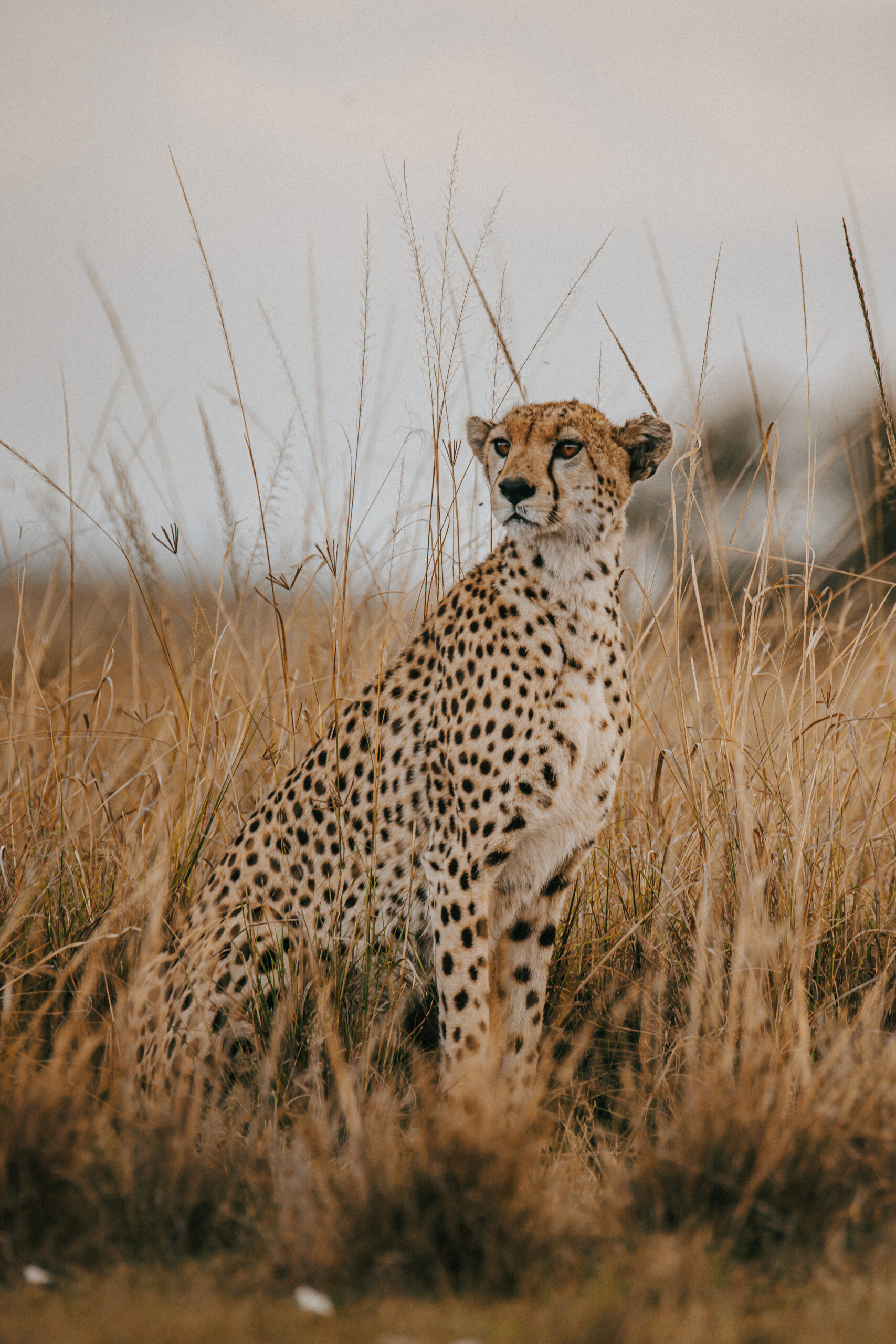
Professional wildlife photographers plan trips to Kenya during the shoulder and green seasons for three reasons. First, the light. Kenya’s rain-season skies produce dramatic cloud formations, golden hour light that lasts longer, and post-storm clarity that the hazy dry season rarely delivers. Second, the absence of dust. August game drives in the Mara kick up plumes of dust that settle on equipment and degrade image quality. April’s damp ground eliminates this. Third, the green backdrop. A cheetah on a green hillside with a storm building behind it is a more compelling image than a cheetah on dry brown grass.
The Instagram version of a Kenya safari is golden savanna, blue sky, dust trails. The photographer’s version is often greener, wetter, and shot in April.
Who Should Not Come in April
Honesty requires the other side.
If your trip is a once-in-a-lifetime bucket-list safari and you want absolute certainty of clear weather, come in August. If the Great Migration river crossings are the primary reason for your trip, come between July and October. If you are self-driving in remote parks without 4×4 experience, April adds risk. If you have mobility issues and camp paths are a concern, wet-season mud can make some properties difficult to navigate. If your schedule is inflexible and a rained-out afternoon drive would cause genuine frustration, the dry season offers more predictability.
April is for travelers who value solitude over certainty, savings over spectacle, and experience over schedule.
How to Book a Green-Season Safari
Book directly with Kenya-based operators where possible. Local operators offer lower rates than international aggregators and have real-time knowledge of road conditions, lodge availability, and seasonal dynamics. Ask specifically about green-season promotions, many lodges run offers that are not advertised on their websites.
Book two to four weeks in advance. Unlike peak season, where you need six to twelve months lead time, April availability is generous. Last-minute deals do appear, but securing your preferred lodge and flight requires modest advance planning.
Confirm that your chosen lodge or camp is open in April. Some luxury properties close for maintenance during the long rains. Most mid-range and budget camps remain open year-round, but verify before paying.
Request a guide with green-season experience. Not all guides are equally comfortable on wet roads or equally skilled at locating wildlife when vegetation is dense. A good green-season guide is the difference between a frustrating drive and an exceptional one.
The Bottom Line
A Kenya safari in April delivers 80 to 90 percent of the peak-season wildlife experience at 50 to 70 percent of the cost, with 10 percent of the crowds. The math is straightforward. The trade-off is afternoon rain that usually clears by evening and roads that require a good driver. For most travelers, that trade-off is not just acceptable, it is the entire point.
The parks do not close in April. The animals do not leave. The sunrise still hits the Mara escarpment at 6:30am and turns the grass gold. The only thing missing is the crowd. And for some travelers, the crowd was always the part they were trying to escape.