

Overrated does not mean bad. It means the gap between reputation and reality is wider than it should be, that you pay more, wait longer, or expect more than the place delivers compared to alternatives you have never heard of. Underrated is the opposite: places that deliver more than their profile suggests, destinations where the experience outperforms the marketing.
Kenya has both. The tourism industry funnels visitors toward a small number of headline destinations because those destinations are easier to sell, easier to package, and easier to find on a search engine. The result is a country with a handful of overcrowded landmarks and a deep bench of places that most visitors never learn about until they meet someone who has been.
This is not a list designed to be controversial. It is designed to be honest. If you have already been to the overrated places and loved them, that is valid. If you have never heard of the underrated ones, that is the point.
THE OVERRATED
1. The Giraffe Centre, Nairobi
The Giraffe Centre in Langata is on every Nairobi itinerary and every Instagram feed. You pay KES 1,500 for non-residents (KES 500 for citizens), queue for a platform, hand-feed a Rothschild’s giraffe, take a photo of it licking your face, and leave. The entire experience takes 20 to 30 minutes. It is pleasant. It is also a gift shop attached to a feeding platform.
The centre does genuine conservation work for the endangered Rothschild’s giraffe, and that matters. But the visitor experience is a production line. The giraffes are habituated to the point of mechanical routine. The crowds are thick, particularly between 9:00am and noon when tour groups arrive in waves.
What to do instead: Visit Giraffe Manor if your budget allows (it is expensive but the experience is in a different category), or drive 30 minutes to Nairobi National Park where wild Maasai giraffes roam free against the city skyline with no feeding platform and no queue.
2. Nairobi’s Carnivore Restaurant
The Carnivore was revolutionary when it opened in 1980. An all-you-can-eat meat feast where waiters circled with Maasai swords skewered with beef, lamb, chicken, pork ribs, and at one time, game meats like crocodile and ostrich. It was a destination restaurant in a city that had very few.
In 2026, the game meats are gone (banned since 2004). The all-you-can-eat concept now competes with dozens of better nyama choma spots across Nairobi. The meat quality is decent but not exceptional. The prices have climbed while the experience has not kept pace. At KES 4,500 to KES 6,000 per person, you can eat significantly better at Cultiva in Karen, INTI in Westlands, or any of the serious nyama choma joints along Langata Road.
What to do instead: For the authentic Kenyan meat experience, go to Kamakis along the Eastern Bypass, where local nyama choma spots serve fresh goat and beef at a fraction of the cost with twice the flavour. For fine dining, see our restaurant list below.
3. Mombasa City Centre
Mombasa is Kenya’s second city, and first-time coastal visitors often plan a day or two exploring it. The reality is that Mombasa’s CBD is congested, hot, and not particularly pleasant to walk around. Fort Jesus is genuinely worth visiting, a 16th-century Portuguese fort and UNESCO World Heritage Site. The Old Town has architectural character and Swahili culture. Beyond those two zones, the CBD itself offers little that justifies time you could spend on the beach or in the surrounding coastal towns.
What to do instead: Visit Fort Jesus and walk Old Town in a focused half-day. Then redirect your time to Diani Beach (south coast), Kilifi (north coast), or Watamu. The coast’s value is in its beaches, marine parks, and smaller towns, not in Mombasa’s urban sprawl.
4. Lake Nakuru for Flamingos
Lake Nakuru was once the “pink lake,” home to millions of lesser flamingos whose massed presence turned the shoreline into one of the most photographed wildlife scenes in Africa. That image still sells the park. The reality in 2026 is different. Fluctuating water levels, driven by rising lake volumes across the Rift Valley since 2010, have altered the lake’s alkalinity. Flamingo numbers have dropped dramatically from their historic peaks. Some seasons, you will see thousands. Other seasons, you will see a few hundred scattered along the shore.
The park still has value. Its rhino sanctuary is well-managed and sightings are consistent. The birdlife beyond flamingos is excellent. But if your primary reason for visiting is the postcard-pink shoreline, check recent reports before booking.
What to do instead: For flamingos, Lake Bogoria consistently hosts larger concentrations than Nakuru in recent years and is far less visited. For rhino sightings, Ol Pejeta Conservancy in Laikipia offers higher density and more intimate viewing.
5. Watamu Beach in Peak Season
Watamu is a perfectly good beach destination with clear water, coral reefs, and the Watamu Marine National Park. But during peak season (December to February), it becomes congested with domestic and international tourists, beach vendors are persistent, and the small town’s infrastructure strains under the volume. The experience does not match the “hidden gem” label that some guides still apply to it.
What to do instead: Visit Watamu in the shoulder months (March, June, or November) when the crowds thin and rates drop. Or skip Watamu entirely and head to Kilifi, 20 minutes south, where the creek is calm, the restaurants are excellent (Distant Relatives hostel, Nautilus), and the tourist density is a fraction of Watamu’s.
6. Maasai Market, Nairobi (for Souvenirs)
The rotating Maasai Market (Tuesday at Capital Centre, Friday at the Village Market, Saturday at the Junction) is the default souvenir shopping recommendation for tourists. The goods are colourful, the vendors are energetic, and the bargaining is a performance. The problem is that most items are mass-produced for the tourist market, identical across every stall, and priced at tourist-inflated rates even after negotiation.
What to do instead: For genuinely handcrafted goods, visit Kazuri Beads in Karen (hand-painted ceramic beads made by local women), the Undugu Fair Trade Shop, or the Utamaduni Craft Centre on Langata Road. For Maasai beadwork specifically, buy directly from women at Maasai villages near the Mara or Amboseli, where prices are lower and the money goes directly to the maker.
7. The David Sheldrick Elephant Orphanage (at Peak Hours)
The Sheldrick Wildlife Trust does critical conservation work, rescuing and rehabilitating orphaned elephants and rhinos. The public visiting hour (11:00am to noon daily, KES 1,500 for non-residents) is the most popular tourist attraction in Nairobi after the Giraffe Centre. The result: a crowded viewing area, limited time with the baby elephants, and an experience that feels more like a spectator event than a wildlife encounter.
What to do instead: Foster an elephant through the Trust’s adoption programme (from USD 50 per year) and visit during a private foster parent visit, which offers a quieter, more personal experience. Or visit the Trust’s Kaluku Field Headquarters in Tsavo, where rehabilitated elephants are reintroduced to the wild in a setting that is nothing like the Nairobi nursery.
8. Amboseli During August Peak Season
Amboseli is a spectacular park. The elephant herds, the Kilimanjaro backdrop, the swamp ecosystem, all of it deserves its reputation. But in August, Amboseli’s relatively small size (392 square kilometres) combined with peak-season visitor numbers creates vehicle congestion at the most popular sighting areas. The observation hill, the swamp viewpoints, and the Kilimanjaro photo spots fill with vehicles from mid-morning.
What to do instead: Visit Amboseli in January, February, or June. The elephant herds are resident year-round. Kilimanjaro is often clearer in January and February than in August. And the park is noticeably emptier, giving you the solitary Kilimanjaro-and-elephants photograph that August visitors fight for.
THE UNDERRATED
1. Samburu National Reserve
Samburu sits in Kenya’s arid north and offers a safari experience fundamentally different from the Mara or Amboseli. The landscape is dry, rocky, and defined by the Ewaso Nyiro River, which draws wildlife from the surrounding semi-desert. Samburu is home to the “Special Five,” species found nowhere else in Kenya’s popular parks: the reticulated giraffe, Grevy’s zebra, gerenuk (the giraffe-necked antelope), Beisa oryx, and Somali ostrich.
The reserve is also one of the best locations in Kenya for leopard sightings. Leopards here are habituated to vehicles and regularly seen along the riverbanks. Elephant herds crossing the Ewaso Nyiro are a daily occurrence. And the Samburu people, culturally distinct from the Maasai, offer an authentic cultural experience that most visitors to Kenya never encounter.
Why it is underrated: Samburu requires an extra flight or a long drive from Nairobi (roughly five to six hours). It does not have the Great Migration. Its name is less recognizable internationally. All of which means fewer visitors, lower prices in green season, and game drives where you share the landscape with two or three other vehicles instead of thirty.
2. Kilifi, Kenya Coast
Kilifi is a coastal town between Mombasa and Malindi that most tourists drive through on their way to Watamu. That is a mistake. Kilifi Creek is one of the most serene waterways on the Kenyan coast, suitable for stand-up paddleboarding, kayaking, and swimming. The town has a growing food scene (Distant Relatives hostel, Nautilus Restaurant, Boatyard) and a community of expats, digital nomads, and creatives who chose it over Diani for its pace and its prices.
There is no resort strip. No beach boys. No tour bus parking. The vibe is closer to a Southeast Asian backpacker town than a Kenyan beach resort, and for a specific type of traveler, that is exactly the appeal.
Why it is underrated: No international marketing. No big hotel chains. Not on the standard tour operator itinerary. Kilifi’s obscurity is its greatest asset.
3. Chyulu Hills National Park
The Chyulu Hills are a volcanic range between Amboseli and Tsavo West, young enough geologically that some formations are only 500 years old. The hills contain Leviathan Cave, one of the longest lava tubes in Africa at over 11 kilometres. The hiking is excellent, the views stretch to Kilimanjaro on clear days, and the park sees fewer visitors in a month than the Mara sees in a morning.
The Chyulu Hills also play a critical ecological role. Rainfall here filters through porous volcanic rock for up to 25 years before emerging at Mzima Springs in Tsavo West, providing 220 million litres of fresh water daily to one of Kenya’s most important ecosystems.
Why it is underrated: No Big Five marketing. No luxury lodge scene (though Ol Donyo Lodge, operated by Great Plains Conservation, is one of the finest safari properties in East Africa). The park requires effort to reach and rewards patience over spectacle.
4. Meru National Park
Meru was the setting for Joy Adamson’s Born Free story and was once one of Kenya’s premier parks. Decades of poaching and neglect nearly destroyed it. Rehabilitation efforts by the Kenya Wildlife Service have brought it back. The park is now home to all Big Five species, large buffalo herds, and the Tana River, which supports hippo, crocodile, and dense riparian birdlife.
Meru’s 870 square kilometres are lush, green, and spectacularly under-visited. Game drives here feel like private affairs. The infrastructure is minimal, which is both the challenge and the reward.
Why it is underrated: Its dark period in the 1980s and 1990s damaged its reputation, and marketing has not fully recovered. Meru requires a deliberate detour from the standard Nairobi-Mara-Amboseli circuit. For visitors who make the effort, it is among the most rewarding parks in Kenya.
5. Lake Turkana, Northern Kenya
Lake Turkana is the world’s largest permanent desert lake, a jade-green body of water in Kenya’s remote northwest that UNESCO designated a World Heritage Site for its paleontological significance. The landscape around it is volcanic, lunar, and unlike anything else in East Africa. The Turkana, El Molo, and Rendille communities who live along its shores maintain cultural practices that have changed little in centuries.
This is not a casual weekend trip. Getting to Turkana requires a multi-day overland journey from Nairobi (roughly two days by road via Marsabit) or a charter flight. The infrastructure is minimal. The heat is extreme. But for travelers who reach it, Turkana delivers a sense of place that no other destination in Kenya, and very few destinations on the continent, can match.
Why it is underrated: Remoteness, difficulty of access, and zero mainstream marketing. Turkana is Kenya’s most extraordinary destination and its least visited.
6. Nairobi National Park
The only national park within a capital city in Africa. Seven kilometres from the Nairobi CBD, 117 square kilometres of open savanna where lion, buffalo, rhino, leopard, cheetah, giraffe, and over 400 bird species live against a backdrop of high-rise buildings and landing aircraft.
First-time visitors often skip it, assuming it is a “city park” without real wildlife. That assumption is wrong. Nairobi NP has one of the highest densities of black rhino in Kenya. Predator sightings are regular. And the surreal quality of watching a lion walk past with the Kenyatta International Conference Centre visible on the horizon is something no other park on the planet offers.
Why it is underrated: The name includes “Nairobi,” which makes international visitors assume it is a zoo or a token urban park. It is neither. Park fees are KES 860 for Kenyan citizens and USD 80 for non-residents (KWS, revised 2024). A morning game drive here is the best use of a pre-safari or post-safari day in the city.
7. Ol Pejeta Conservancy, Laikipia
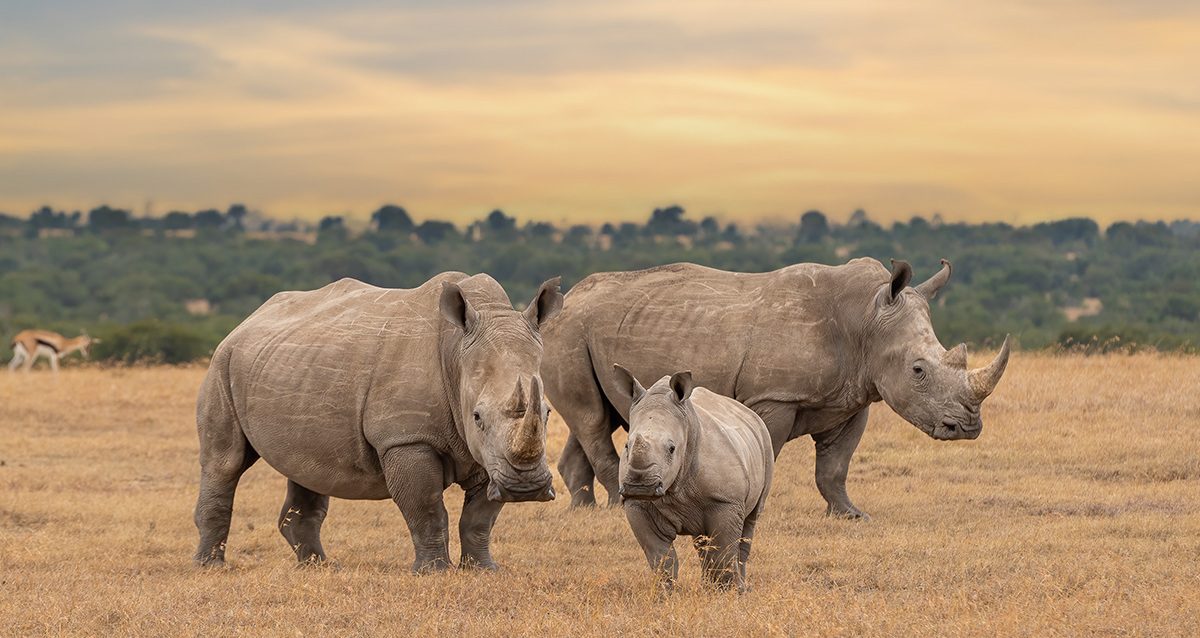
Ol Pejeta sits on 360 square kilometres of the Laikipia Plateau with the equator running through it and Mount Kenya visible to the east. It is home to the last two northern white rhinos on earth (Najin and Fatu), the highest density of black rhino in East Africa, a chimpanzee sanctuary (the only one in Kenya), and healthy populations of lion, elephant, buffalo, and leopard.
Unlike national parks, Ol Pejeta operates as a conservancy with night drives, walking safaris, cycling safaris, and off-road game viewing all permitted. The conservation story is not a marketing add-on. It is the operating model. Every shilling of conservancy fees funds anti-poaching patrols, habitat management, and community programmes.
Why it is underrated: Ol Pejeta lacks the name recognition of the Mara. First-time visitors default to the headline parks. Returning visitors, conservationists, and photographers know better.
8. Hell’s Gate National Park
An hour and a half from Nairobi, Hell’s Gate is one of the only parks in Kenya where you can walk and cycle among wildlife. No vehicle required. The park’s volcanic gorge, Fischer’s Tower, and dramatic cliff faces inspired the landscape in Disney’s The Lion King (confirmed by the film’s production team). Geothermal steam vents rise from the earth. Zebra, giraffe, buffalo, and baboons graze along the cycling paths.
Entry is KES 350 for Kenyan citizens (KWS, 2024). Bike rental at the gate costs KES 500 to KES 800. A full day of cycling, hiking, and gorge walking costs less than lunch at most Nairobi restaurants.
What makes it underrated: It sits in the shadow of Lake Naivasha, which gets the hotel bookings and the boat rides. Hell’s Gate itself is treated as a half-day add-on. It deserves a full day and a return visit.
The Point
Kenya’s tourism economy is built on a small number of famous names. Those names earned their reputation. The Mara is extraordinary. Diani is beautiful. The Giraffe Centre raises money for conservation. None of them are bad.
But a country with 50 national parks and reserves, 270 kilometres of Indian Ocean coastline, the world’s largest desert lake, and the only national park inside a capital city deserves a longer look than the first page of a Google search provides. The overrated places will always draw crowds. The underrated ones are where the crowds have not arrived yet, and where the experience, for now, still belongs to you.